Top 5 Factors Buyers Check Before Ordering Nickel Wire
Buying nickel wire is not simply a matter of comparing the price per kilogram.
For industrial buyers, the more important question is whether the nickel wire will meet the chemical, dimensional, mechanical, surface, and delivery requirements of the application.
Before placing an order, experienced procurement teams typically check five key factors:
- Nickel purity and chemical composition
- Wire diameter and dimensional tolerance
- Mechanical properties and material condition
- Surface quality and appearance
- COA, packaging, and batch consistency
Here is what buyers should check before confirming an order.
1. Nickel Purity and Chemical Composition
Nickel content is usually the first specification buyers check.
Common purity requirements may include grades such as 99.6% Ni or 99.9% Ni, but the Ni percentage alone does not provide the complete picture.
Buyers should also check the limits or actual values of relevant elements, depending on the application:
- Ni
- Fe
- Cu
- C
- S
- Si
- Mn
- Co
- Other specified trace elements
Why does this matter?
Two nickel wires can both be described as high-purity nickel wire while having different impurity profiles.
For applications sensitive to chemical composition, these differences can affect:
- Electrical characteristics
- Corrosion behavior
- High-temperature performance
- Metallurgical compatibility
- Process consistency
Procurement tip
Do not ask only:
“What is the nickel purity?”
Also ask:
“Can you provide the complete chemical composition and COA?”
This is particularly important when comparing 99.6% and 99.9% nickel wire.
2. Wire Diameter and Dimensional Tolerance
The second factor is wire size.
The required diameter depends on the customer's equipment, processing method, component design, or downstream application.
Buyers should specify:
- Nominal wire diameter
- Diameter tolerance
- Wire length or coil weight
- Dimensional measurement method, where applicable
For example, a buyer may require a specific diameter rather than simply “nickel wire.”
A small dimensional deviation can become important when the wire is automatically fed, wound, resistance-heated, welded, or incorporated into a precision component.
Why tolerance matters
The nominal diameter tells you the target size.
The tolerance tells you how much variation is permitted.
Therefore, a complete purchasing specification should look more like:
Nickel wire + grade + diameter + tolerance + condition
rather than simply:
99.9% nickel wire
Procurement tip
Before ordering, confirm whether the supplier's standard tolerance is compatible with your equipment.
If you have a drawing or technical specification, send it to the supplier before quotation.
3. Mechanical Properties and Material Condition
Nickel wire is available in different material conditions, and this can affect how the wire behaves during processing.
Depending on the grade and application, buyers may need to check:
- Tensile strength
- Elongation
- Hardness, where applicable
- Annealed condition
- Hard or semi-hard condition
- Flexibility
- Formability
Why does material condition matter?
Consider two wires with the same:
- Nickel purity
- Diameter
- Surface appearance
They may still behave differently during bending, winding, forming, or other processing if their mechanical condition is different.
For applications involving repeated bending or forming, elongation and material condition may be more important than simply selecting the highest Ni purity.
Procurement tip
If your application requires the wire to be:
- Bent
- Wound
- Formed
- Stamped
- Drawn
- Automatically fed
specify the required mechanical condition before placing the order.
4. Surface Quality and Wire Appearance
The fourth factor is surface quality.
Nickel wire is often used in applications where surface condition can affect subsequent processing or final product quality.
Buyers may check for:
- Smooth surface
- Uniform appearance
- Oxide or discoloration
- Cracks
- Scratches
- Dents
- Burrs
- Oil or contamination
- Surface defects
The required surface condition depends on the intended application.
For example, a general metallurgical application may have different surface requirements from a precision electrical or chemical application.
Why does surface quality matter?
Poor surface condition can create problems during:
- Welding
- Joining
- Winding
- Plating
- Electrical contact
- Further processing
Therefore, surface inspection should be included in the purchasing specification when the application requires it.
Procurement tip
If surface appearance is critical, ask the supplier to confirm:
Surface condition + inspection requirements + acceptable defect limits
rather than relying on a general description such as “good surface.”
5. COA, Packaging, and Batch Consistency
The final factor is not only about the material itself.
It is about whether the supplier can consistently deliver the agreed specification.
Before ordering, buyers should check:
Certificate of Analysis
The COA should allow the buyer to verify relevant specifications such as:
- Chemical composition
- Nickel content
- Impurity levels
- Diameter
- Mechanical properties
- Batch or heat number
- Inspection information
Batch Consistency
For repeat orders, buyers should pay attention to whether different batches maintain consistent:
- Chemical composition
- Diameter
- Mechanical properties
- Surface condition
- Packaging
This becomes increasingly important for customers purchasing nickel wire on a regular basis.
Packaging
Packaging should protect the wire from:
- Damage
- Contamination
- Moisture
- Deformation
- Surface damage during transportation
Depending on the product form, buyers may specify:
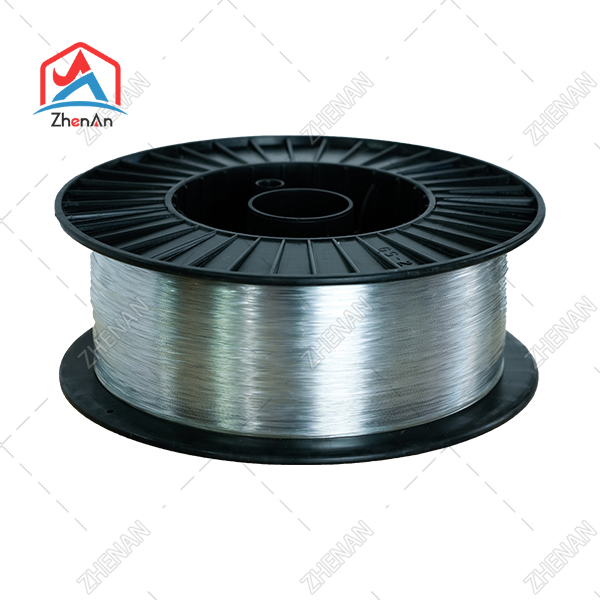
- Coil
- Spool
- Roll
- Individual bundle
- Protective wrapping
- Export carton or wooden case
Procurement tip
For the first order, request a sample, technical datasheet, or COA for approval before committing to a larger quantity when the application is sensitive.
Nickel Wire Pre-Order Checklist
Before sending a purchase order, buyers can use this checklist:
| Factor | What to Check |
|---|---|
| Chemical composition | Ni %, Fe, Cu, C, S, Si, Mn, Co and other specified elements |
| Diameter | Nominal diameter and tolerance |
| Mechanical properties | Tensile strength, elongation, hardness/condition where applicable |
| Surface quality | Smoothness, scratches, cracks, contamination and other defects |
| Quality & delivery | COA, batch traceability, packaging, quantity and consistency |
A complete inquiry should therefore provide more information than:
“Please quote nickel wire.”
A better inquiry includes:
Grade + Ni purity + diameter + tolerance + material condition + surface requirement + quantity + packaging + destination
What Should Buyers Tell the Nickel Wire Supplier?
To receive an accurate quotation, provide as many of the following details as possible:
1. Nickel Grade
For example:
- Ni ≥99.6%
- Ni ≥99.9%
- Customer-specified nickel grade
2. Wire Diameter
State the required diameter and tolerance.
3. Application
Tell the supplier how the nickel wire will be used.
For example:
- Electrical components
- Alloy production
- Welding
- Chemical processing
- High-temperature applications
- Electroplating
- Other industrial applications
The application helps determine which specifications are actually important.
4. Quantity
Specify:
- Trial quantity
- Regular order quantity
- Annual demand, if available
5. Packaging
State whether you require:
- Coil
- Spool
- Roll
- Individual packing
- Customized packaging
6. Destination
The destination is important for determining the appropriate export packaging and quotation basis.
99.6% vs 99.9%: Should Purity Be Your First Priority?
Not always.
If your application has a strict chemical specification, purity may be a critical purchasing factor.
However, if your process is more sensitive to diameter, mechanical condition, surface quality, or electrical properties, simply choosing a higher Ni percentage may not solve the actual problem.
The right procurement sequence is:
Application → Grade → Chemical composition → Diameter → Mechanical properties → Surface → COA → Packaging
This approach helps prevent buyers from paying for specifications they do not actually need.
5 Questions to Ask Before Ordering Nickel Wire
Before confirming the purchase order, ask the supplier:
1. What is the actual nickel content?
Do not rely only on a nominal grade. Ask for the actual chemical composition or COA.
2. What is the diameter tolerance?
Confirm the actual dimensional tolerance, especially for precision applications.
3. What is the material condition?
Clarify whether the wire is annealed, hard, semi-hard, or another specified condition.
4. Can you provide a batch-specific COA?
This helps verify that the delivered material matches the agreed specification.
5. How is the wire packaged?
Confirm that the packaging can protect the wire during handling, storage, and international transportation.
Final Takeaway
Before ordering nickel wire, buyers should look beyond the headline Ni purity.
The five most important purchasing factors are:
① Chemical composition
② Diameter and tolerance
③ Mechanical properties
④ Surface quality
⑤ COA, packaging, and batch consistency
The best nickel wire is not necessarily the one with the highest purity.
It is the wire that matches the complete technical specification of the application and can be supplied consistently from batch to batch.
Looking for nickel wire for a specific application?
Send your required Ni purity, wire diameter, tolerance, application, quantity, packaging requirements, and destination. A complete specification allows the supplier to recommend the appropriate nickel wire grade and provide the relevant technical documents for review.