Continuous casting operations at European steelworks require exceptional process control to achieve high sequence casting ratios and meet strict surface quality standards. A major operational challenge in the casting shop is submerged entry nozzle (SEN) clogging and skull formation, which often stem from poor inclusion modification during ladle treatment. When micro-alloying or deoxidation consumables fail to deliver uniform chemical concentrations across the melt, high-melting-point solid precipitates accumulate in the refractory channels, restricting liquid steel flow and causing severe operational instability.
To prevent these costly casting disruptions and optimize sequence casting times, European metallurgy plants are re-evaluating their secondary treatment inputs. Moving away from highly variable spot-market products, modern melt shops utilize tightly calibrated composite linear additives. Injecting these customized composite materials directly into the lower zones of the ladle allows operators to precisely control inclusion modification chemistry and eliminate casting flow issues. This technical document covers the production processes, grade variations, and engineering parameters necessary to stabilize continuous casting flows, showing how direct partnership with a certified global cored wire supplier like ZhenAn supports production reliability.
---
1. Definition: How Does a Cored Wire Supplier Help Minimize Flow Instability in Continuous Casting?
In modern high-sequence steel casting, a professional cored wire supplier provides specialized, composite linear additives designed to deliver reactive elements deep into the liquid steel matrix. These products consist of a continuous, cold-formed steel sheath enclosing high-density micro-granular alloy powders, engineered specifically to feed precise elemental quantities into the ladle using automated injection lines.
By protecting reactive core materials from atmospheric oxidation and top slag reactions, this methodology ensures precise micro-alloying and deep deoxidation control. For the continuous casting shop, this technology provides the exact chemical adjustments required to keep inclusion phases completely liquid at casting temperatures, preventing buildup inside refractory nozzles and ensuring a stable, uninterrupted liquid steel flow from the ladle to the mold.
---
2. Production Process: How Does a Ladle Wire Feeding System Maintain Filler Uniformity and Mechanical Integrity?
Manufacturing dependable linear additives for high-speed automated injection lines requires high-precision profiling and continuous core density monitoring. The manufacturing process begins with low-carbon, cold-rolled steel strips selected for uniform thickness and clean surfaces. This steel casing acts as a physical and thermal barrier, preventing the internal core materials from melting prematurely during furnace entry.
Simultaneously, the internal core alloys—such as pure calcium, calcium-silicon mixtures, or micro-alloying elements—are crushed and screened to eliminate moisture and dust. The steel strip passes through a multi-stage forming mill that shapes it into a continuous U-channel. Advanced volumetric feeding equipment then introduces a steady, highly accurate flow of core powder into the moving steel channel.
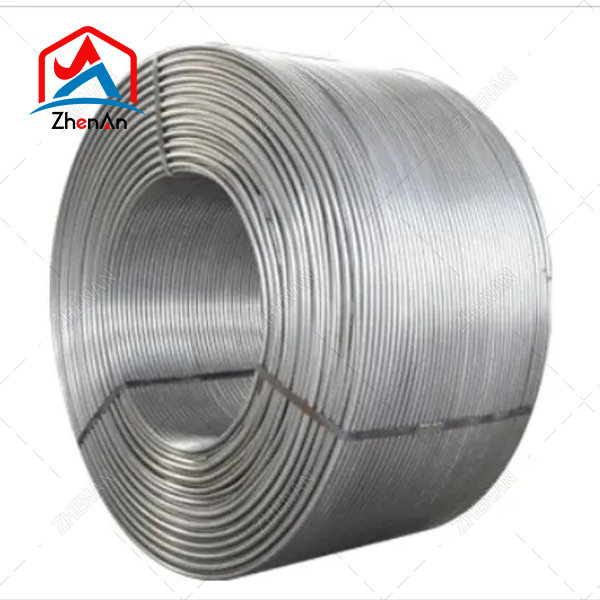
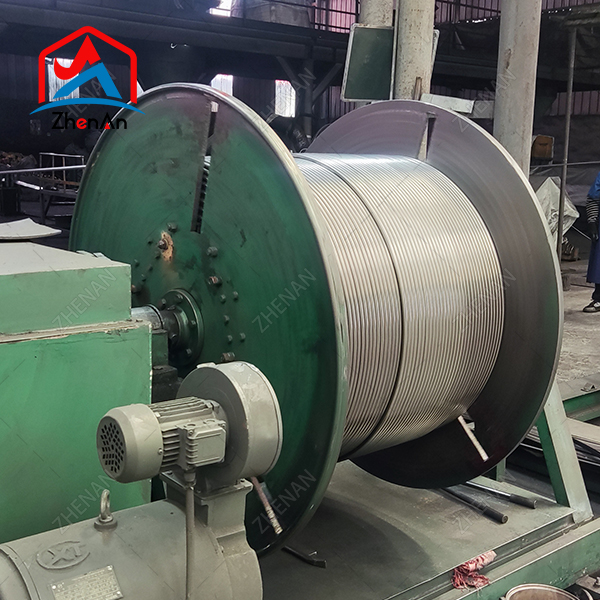
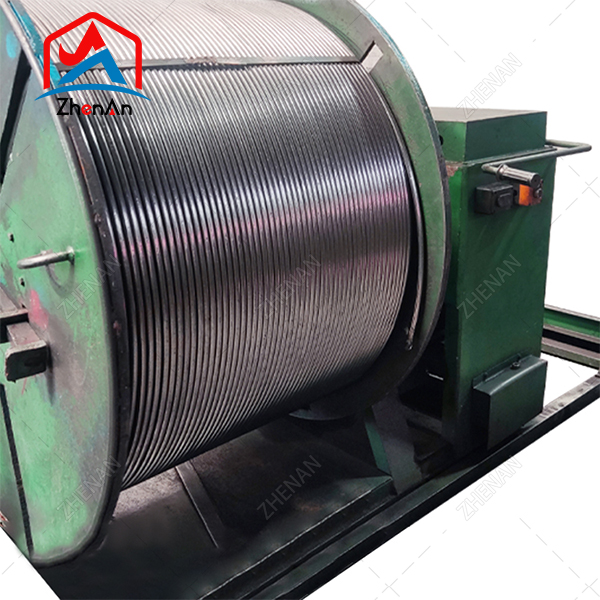
The filled channel is fed into closing rollers that form a tight, mechanical lock-seam, compressing the internal powder core to eliminate air pockets. The completed product is wound into heavy-duty coils under precise tension control, ensuring the wire remains perfectly straight and feeds smoothly through modern multi-strand injection equipment without catching or bending during casting operations.
---
3. Grade Matrix: Which Core Types Drive Precision Steelmaking Wire Injection Protocols?
To maintain process stability across varying casting sequences, metallurgy teams must match their core chemistry with the exact deoxidation requirements of the steel grade. Modern steelmaking wire injection networks typically utilize several specialized core compositions:
- Inclusion Modification Formulations: This critical group includes specialized calcium wire for steelmaking and composite CaSi cored wire options, engineered to convert solid alumina clusters into fluid liquid phases.
- Primary Trimming Alloys: Features high-density configurations such as FeSi cored wire, aluminum cored wire, and high-purity carbon cored wire for steel, specified for rapid, localized adjustments to base chemistry targets in the ladle furnace.
- Advanced Micro-Alloying Elements: Incorporates technical selections including titanium wire for steelmaking and custom rare earth cored wire types, designated for micro-alloying grains and altering sulfide morphologies in ultra-high-strength steel grades.
---
4. Technical Parameters: What Dimensions Establish a Reliable Ladle Wire Feeding System Specification?
A reliable metallurgical procurement contract must verify strict tolerance boundaries for both chemical filler metrics and physical dimensions. For European specialty steel shops, the following parameters serve as the standard baseline for batch quality verification:
| Technical Parameter Dimension | Standard Metallurgical Reference Value | Direct Operational Impact on Refining |
|---|---|---|
| Outer Diameter (OD) Tolerance | 13.0mm ± 0.5mm Standard | Guarantees smooth, high-speed feeding without jamming in guide tubes. |
| Steel Jacket Strip Thickness | 0.40mm to 0.60mm Baselines | Controls the exact structural melting depth relative to ladle injection velocity. |
| Core Powder Weight Ratio | ≥ 60% of Total Linear Mass | Maximizes active element density and stabilizes chemical addition calculations. |
| Core Moisture Limitation | ≤ 0.05% H2O Maximum | Eliminates hydrogen pick-up risks and prevents hazardous furnace splashing. |
| Coil Outer Dimensions | Horizontal/Vertical Cage Wrapped | Matches standard European uncoiling pay-off systems for seamless line integration. |
---
5. Chemical Industry Application: How Do Advanced Calcium Wire for Steelmaking Precursors Enhance Synthesis Catalysts?
While metallurgy accounts for bulk consumption, high-purity linear core fillers also play an important role in advanced chemical extraction and synthesis. In these non-ferrous chemical processes, the material functions as a high-affinity reducing agent rather than an alloying additive.
Chemical processing operations use calcium wire for steelmaking precursors to reduce rare earth metal oxides and purify titanium sponge matrices. The steel sheath provides a protective barrier against atmospheric oxygen and moisture, allowing chemical processing lines to achieve high reduction yields, avoid air contamination, and maintain precise control over sensitive high-temperature chemical reactions.
---
6. Metallurgical Industry Application: How Do Automated Ladle Wire Feeding System Techniques Prevent Casting Nozzle Clogging?
Within European continuous casting operations, integrating an automated ladle wire feeding system is standard practice for avoiding continuous casting nozzle buildup. During upstream aluminum deoxidation, hard, crystalline alumina ($Al_2O_3$) particles form in the melt. If left untreated, these solid particles accumulate inside the continuous casting nozzle channels, causing flow restriction, asymmetrical mold turbulence, and catastrophic strand breakages.
Injecting certified CaSi cored wire deep into the ladle introduces active calcium that reacts with these alumina inclusions, converting them into liquid calcium aluminates ($12CaO \cdot 7Al_2O_3$). These liquid phases agglomerate easily, floating upward into the slag layer to be removed from the melt. Any remaining inclusions stay small, spherical, and uniformly distributed throughout the matrix. This modification significantly improves steel cleanliness, prevents casting nozzle build-up, and enhances the fatigue life and impact toughness of the final specialty steel products.
---
7. Grade Comparison: Calcium Silicon Cored Wire VS Calcium Cored Wire
Choosing between these two dominant calcium delivery lines depends on the silicon restrictions of the targeted steel chemistry:
- Calcium Silicon Cored Wire (CaSi cored wire): The traditional choice for silicon-killed steel grades, such as structural alloys and structural plate steels. It introduces both calcium for inclusion modification and silicon for supplementary deoxidation, providing excellent element recovery and cost-efficiency.
- Calcium Cored Wire (Pure Calcium Wire): The mandatory choice for silicon-restricted steels, including ultra-low carbon automotive sheets and clean line-pipe steels. It allows metallurgists to perform comprehensive inclusion modification without adding any silicon, preventing composition drift and keeping materials well within strict quality limits.
---
8. Comparison with Similar Products: Ferro Silicon Cored Wire VS Carbon Cored Wire for Steel
Evaluating these trimming additives requires analyzing how they modify separate chemical components within the ladle metallurgy furnace:
- Ferro Silicon Cored Wire (FeSi cored wire): Designed explicitly to make micro-ppm silicon adjustments in silicon-alloyed structural steels. It provides high elemental recovery rates and rapid, localized dissolution into the liquid metal matrix without disrupting the surrounding carbon profile.
- Carbon Cored Wire for Steel: Engineered exclusively for high-accuracy recarburization treatments during final ladle trimming. It provides an efficient, low-dust method for achieving narrow carbon limits in high-carbon wire rod and spring steel heats, with zero risk of introducing unexpected silicon contaminants.
---
9. Procurement Guide: Evaluating Material Consistency and Securing Standard Packaging Deliveries
To reduce risk when importing materials into competitive industrial markets, procurement departments should integrate three core quality assurance practices into their supply contracts:
- Verify Sectional Core Linear Density: Supply contracts must specify strict limits on core weight consistency per meter. Sourcing teams should require the supplier to verify that alloy filler distribution remains completely uniform across the entire coil length, preventing localized addition errors in the ladle.
- Enforce Airtight Steel-Cage Packaging Rules: Reactive materials like calcium degrade rapidly when exposed to ambient moisture. Purchasing contracts should always specify heavy-duty Standard Packaging, utilizing waterproof shrink-wrap, internal desiccant packs, and rugged steel support cages to keep product chemistry stable during long-distance transit and warehouse storage.
- Build Direct Refiner Alliances: Move away from volatile spot-market brokers. Building direct relationships with integrated manufacturers like ZhenAn guarantees consistent volume allocations during high-demand cycles and gives technical teams direct access to lot-specific analytical data.
Contact ZhenAn's European Metallurgy Sourcing Desk:
WhatsApp/WeChat: +86 15518824805
---
10. Frequently Asked Questions (FAQ)
Q1: How can unsuitable cored wire specifications affect continuous casting stability?
A: Unsuitable cored wire specifications disrupt continuous casting by causing incomplete or improper inclusion modification. For example, if a wire has an inadequate calcium content or an uneven core filling density, it will fail to completely convert solid, high-melting-point alumina clusters into low-melting-point liquid calcium aluminates. These residual solid inclusions accumulate inside the submerged entry nozzle (SEN), leading to nozzle clogging, restricted steel flow, dangerous mold level fluctuations, and an increased risk of caster strand breakages.
Q2: What cored wire parameters influence steel refining and casting performance?
A: The primary technical parameters that influence metallurgical performance include the outer diameter consistency, the thickness of the outer steel jacket, the core filling ratio, and the moisture level of the core powder. The thickness of the steel sheath is particularly critical; it determines the wire's survival time in the hot steel bath and ensures that the internal alloy core melts at the optimal depth for maximum dissolution and uniform recovery.
Q3: How does cored wire diameter affect injection efficiency during steel treatment?
A: Cored wire diameter directly determines the physical compatibility and feeding stability within automated injection equipment. Standard diameters, such as 13.0mm, must be manufactured to tight tolerances to prevent mechanical slippage or guide tube jamming. A consistent diameter ensures stable feeding velocities, allowing the wire to reach the optimal deep zones of the ladle before releasing its reactive core materials.
Q4: Can inconsistent cored wire filling material cause alloy composition fluctuations?
A: Yes, variations in internal core filling density per meter lead directly to composition fluctuations in the melt. If a product like FeSi cored wire contains internal air pockets or uneven powder distribution, the automated feeding calculations will deliver incorrect alloy additions. This results in unpredictable elemental recovery rates and expensive, time-consuming chemical adjustments in the ladle furnace.
Q5: Why is stable cored wire quality important for continuous casting production?
A: High-volume continuous casting operations rely on highly predictable metallurgical characteristics. Stable consumable quality guarantees uniform inclusion modification across every heat, allowing steel plants to maintain extended sequential casting sequences, minimize nozzle changes, lower refractory consumption costs, and ensure consistent surface and internal quality in the cast steel slabs.
Q6: How do steel plants match cored wire specifications with different steel grades?
A: Metallurgists match specifications based on the deoxidation practice and chemical limits of the target steel grade. For instance, silicon-killed structural steels typically use cost-effective CaSi cored wire, whereas silicon-restricted automotive alloys require pure calcium wire for steelmaking to prevent unexpected silicon pickup while ensuring complete inclusion modification.
Q7: What problems can occur when cored wire feeding speed is not optimized?
A: If the injection speed is too low, the steel jacket melts prematurely, releasing reactive core elements like calcium into the upper slag layer where they oxidize rapidly and cause dangerous splashing. Conversely, if the speed is too high, the wire can hit the bottom refractory lining of the ladle before completely dissolving, causing localized refractory wear and incomplete alloy mixing throughout the melt.
Q8: How can manufacturers ensure reliable cored wire performance in casting operations?
A: Premium manufacturers like ZhenAn ensure performance reliability by utilizing continuous online laser diameter measuring, automated strip tension monitors, and electronic core filling scales during production. Every batch undergoes strict pre-shipment laboratory analysis and is packed in heavy-duty, moisture-barrier Standard Packaging to ensure the material arrives free from contamination and ready for direct furnace charging.